
"How Your Fitness Benefits Your Child"
So, I am a parent and I have always loved lifting weights and playing sports to keep fit. I realize the importance of encompassing both physical and mental well-being, and how it plays a pivotal role in shaping a child's early development. From infancy to adolescence, we serve as powerful role models, influencing their behaviour, attitudes, and overall health. I have written this blog to explore the profound impact of parental fitness on a child's development, highlighting the significance of fostering a healthy lifestyle within the family unit.
8/19/20252 min read

"How Your Fitness Benefits Your Child"
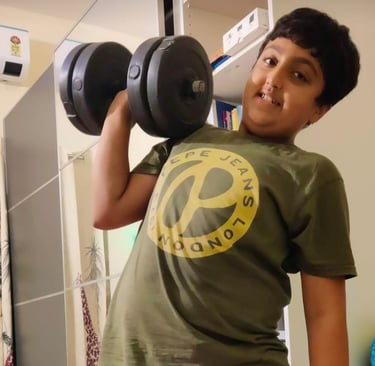
(That's my 11-year-old showcasing his strength - he saw me training every day and now he has started training too)
So, I am a parent and I have always loved lifting weights and playing sports to keep fit. I realize the importance of encompassing both physical and mental well-being, and how it plays a pivotal role in shaping a child's early development.
From infancy to adolescence, we serve as powerful role models, influencing their behaviour, attitudes, and overall health. I have written this blog to explore the profound impact of parental fitness on a child's development, highlighting the significance of fostering a healthy lifestyle within the family unit.
Physical Fitness and Its Impact on Children
early on I realized how important physically fit parents are and how impressionable the minds of children are and by being a physically fit parent, I am setting an example for my child and subconsciously and hopefully encouraging them to adopt similar habits. Physically fit parents set a positive example for their children, and encourage them to adopt similar habits.
Research has shown that children of fit parents have lower rates of obesity, cardiovascular disease, and type 2 diabetes. Regular physical activity helps to regulate weight, improve sleep, and boost overall health.
Moreover, exercise has been linked to improved cognitive function in children. Physical activity stimulates the brain, enhancing memory, attention, and problem-solving skills. Studies have shown that children who participate in sports and other physical activities tend to perform better academically.
Mental Fitness and Its Influence on Children
Mentally fit parents are better equipped to handle life's challenges and provide emotional support for their children. When a parent demonstrates positive coping mechanisms and stress management techniques, they teach their children valuable skills that can benefit them throughout life.
Additionally, a mentally fit parent is more likely to engage in positive parenting practices, such as providing praise, and encouragement, and setting appropriate boundaries. They are also less likely to use harsh discipline or engage in negative behaviours that can harm their children's emotional development.
Children who grow up in homes where parents are mentally healthy and resilient are more likely to develop resilience themselves. Resilience is the ability to bounce back from adversity and overcome challenges. It is a crucial skill that can help children succeed in life.
Fostering a Healthy Lifestyle Within the Family Unit
Parents play a crucial role in teaching their children about healthy eating habits. By providing nutritious meals and snacks and limiting unhealthy foods, parents can help their children develop a lifelong appreciation for healthy food.
Spending quality time together as a family is essential for a child's development. Engaging in activities that promote physical and mental well-being, such as family outings, game nights, or shared hobbies, can strengthen family bonds and create positive memories.
Ultimately, parents are the most important role models in a child's life. By demonstrating healthy behaviours, such as regular exercise, stress management, and positive thinking, parents can inspire their children to follow suit.
Conclusion
Parental fitness is a powerful predictor of a child's development. By prioritizing their own physical and mental health, parents can create a positive and supportive environment that fosters their children's growth and well-being. By modelling healthy behaviours, teaching healthy habits, and spending quality time together, parents can help their children develop into resilient, successful, and happy individuals.